The default playbook in multifamily right now is to optimize for new-lease trade-out spread. You push asking rents on every move-in, you accept that some residents leave because the renewal number was uncomfortable, and you backfill at a higher rate. The spreadsheet looks good in any given quarter. Over a ten-year hold, the math gets less clear. We've spent a lot of time on the second version of that math, and what we keep finding is that resident retention — not trade-out — is the variable that decides how the back half of the hold actually performs.
The Math Most Operators Skip
Most operators we talk to treat retention as a customer-experience metric. It's not. It's a financial line item, and the difference between a 75% renewal rate and a 50% renewal rate over a ten-year hold is measured in hundreds of thousands of dollars per hundred units of cumulative NOI, not in resident satisfaction surveys.
Walk through the simple version. Two buildings, identical 100 units, identical $2,000 starting rents. Building A renews 75% of residents at 4% growth. Building B renews 50% at 6% growth. Year one, Building B looks better — the trade-out spread is real, and on paper you've pushed rents harder. Year three, the math has shifted. The turnover differential has cost Building B real money in vacancy days, make-ready expense, leasing concessions, and the marketing spend that comes with backfilling units. By year seven, the cumulative NOI difference is meaningful. By year ten — the horizon we actually underwrite to — Building A is the better asset, and it's not close.
This isn't a contrarian take. It's just arithmetic that requires you to stop optimizing quarter by quarter.
The reason most operators don't run this math is that the people pricing the renewals usually don't hold the building. Third-party property managers get paid on revenue collected and occupancy — neither of which captures the long-tail cost of churn. The trade-out spread is visible. The future NOI loss from a higher-turnover resident base is not.
What Turnover Actually Costs
The honest number per unit is hard to publish because every building is different. Vacancy days vary by submarket, make-ready costs vary by unit condition, and the leasing concession environment shifts every quarter. Directionally:
- A move-out typically costs most of a month's rent in revenue loss while the unit sits vacant and gets re-leased
- Make-ready — paint, clean, repair, replace — runs into thousands per unit even on a unit in reasonable condition
- Leasing concessions in a soft lease-up environment can erode the trade-out spread before the new resident even signs
The point isn't that the cost is precisely some dollar figure. The point is that the cost is large enough that the trade-out spread on the new resident has to be substantial to offset it. In supply-pressured markets where lease-up concessions are biting — which describes much of the Mountain West going into 2026 — that spread often isn't large enough.
According to the National Apartment Association's 2026 Outlook, resident retention should remain near record levels into next year, with renewal rent growth expected at 3% or better. That's directionally consistent with what we're seeing in our own portfolio and across the comps we track. The renewal-versus-new-lease spread has compressed across the industry — even at the public REITs, where new-lease rents and renewal rents have diverged in ways that make the trade-out math harder to defend.
You can run a building hot for three years. You can't run one hot for ten.
What Manage-for-Retention Looks Like Operationally
Saying you manage for retention is easy. Doing it requires four operational habits that most fee-managed PM structures aren't built to deliver:
- Renewal pricing discipline. When the market is hot, you can push renewal rents harder. When the market is soft, you can't. A lot of operators apply the same uniform percentage in both environments because that's what the revenue management system spits out. We adjust to the building's actual competitive position, which sometimes means renewing flat in a quarter when the comps aren't supporting an increase. Holding the resident is worth more than the increase you would have walked away from.
- Maintenance response speed. Every credible survey of renter satisfaction puts maintenance response time at the top of the list of what residents actually care about. It's also one of the easiest things to get wrong when the operator is geographically distant or stretched too thin across too many properties per regional manager.
- Resident communication. Move-in to renewal is roughly fourteen months. The relationship the resident has with the property across those fourteen months decides whether they renew. Communication is the cheapest part of operations and the highest-leverage.
- Unit-level pricing intelligence. The four units coming up for renewal next month should not all be priced identically. A unit with a long-tenured resident and a strong renewal history is not the same unit as one that's been turned twice in two years. Treating them as the same product is how operators leave money on the table without knowing it.
None of this is revolutionary. It's the standard owner-operator playbook. The reason it's rare is that most multifamily today is run by third-party managers whose incentives don't align with the long-hold owner. The PM gets paid on revenue and occupancy; they don't sit on the building for ten years. The owner does.
How This Affects Our Acquisitions
The retention-first lens changes what we're willing to buy. When we underwrite a deal, the assumptions we stress-test hardest are renewal rate and turnover cost — not year-one rent growth. We'd rather buy a building with a 50/50 unit mix in a submarket with mature household formation than a one-bedroom-heavy building in a corridor optimized for transient renters.
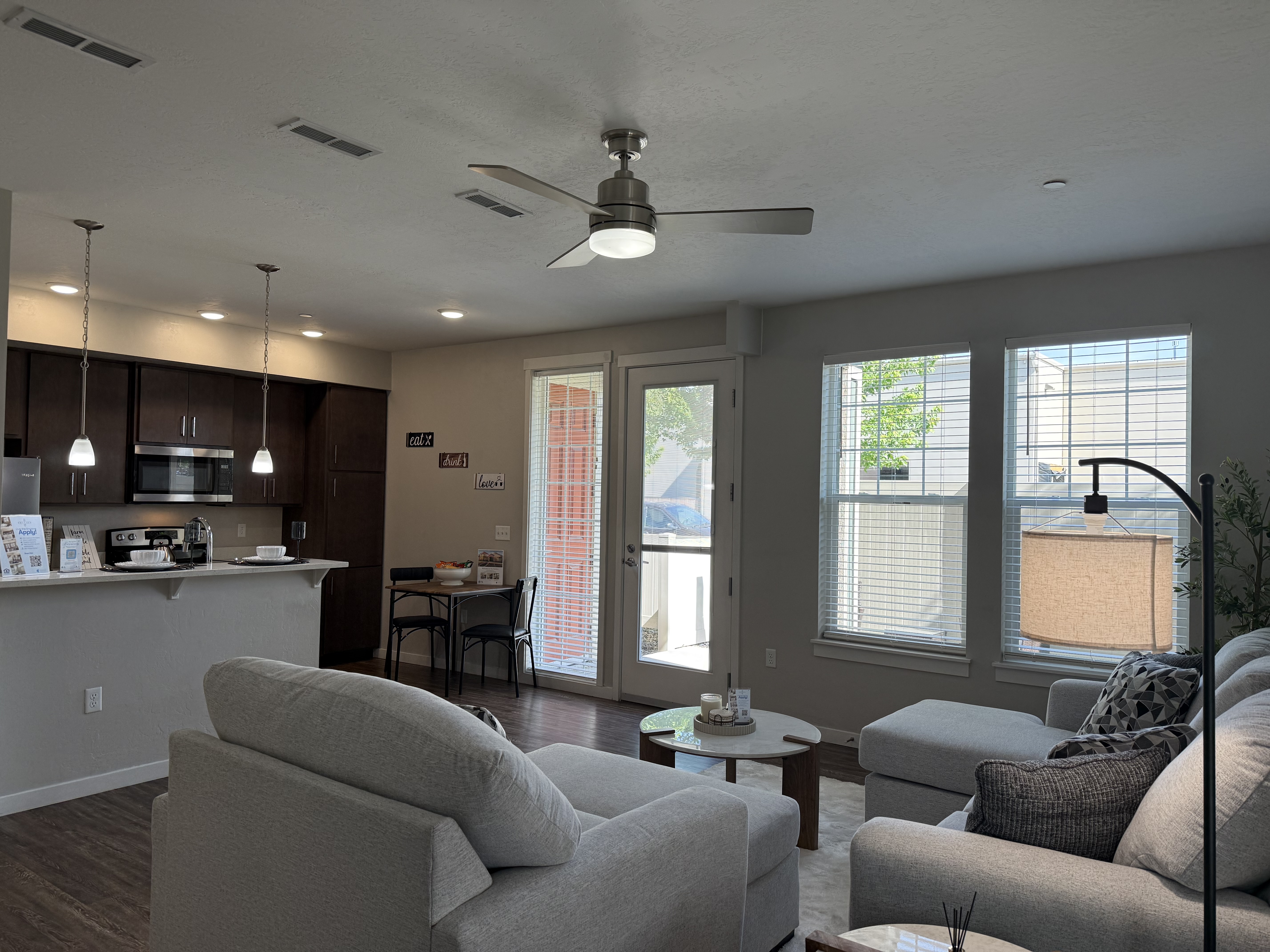
The Enclave is the clearest example in our portfolio. The 50/50 split between two-bedroom and three-bedroom units pulls a resident base with higher renewal propensity by design. Three-bedroom families don't move because the rent ticked up four percent. They move because their life changed — and the gap between those two reasons, multiplied across a ten-year hold, is the entire thesis.
That kind of underwriting bias compounds. Over a hold horizon, it's the difference between a building that's been turned twice and one that's been turned five times. The first one has institutional value at exit. The second one is a problem someone else has to solve.
For owners considering a sale, this is also why we're a different kind of conversation than a typical buyer. We're not optimizing for the year-one trade-out story to flip the property in three years. We're underwriting the building's ten-year retention profile, which means we can pay a fair number for a building that's actually being well-operated — and we can structure a partnership that doesn't require ripping up the operating playbook on day one. If the property is already running well, the worst thing a new owner can do is break the things that are working.
What We're Watching
We expect retention rates across the Mountain West to hold up through the 2026 supply wave, supported by the same forces that have made renewal pricing power durable nationally: a wide rent-versus-own premium, sticky employment, and a renter base that increasingly treats apartments as a longer-cycle housing choice rather than a temporary one. Where we'd flag risk is in submarkets absorbing concentrated new deliveries, where the renewal calculation gets harder because the comparison set is suddenly fresh product with concessions.
For capital partners considering long-hold multifamily exposure, the operator's incentive structure is the variable that matters most. Optimizing for trade-out is fine for short-cycle capital. It's a slow leak for everyone else.
We'll have more on this in our forthcoming “Five Things We Underwrite First” piece — turnover assumptions are line item number one. Subscribe below to get it when it publishes.